

VPN acceptance is an access policy, not a technical standard or a guarantee that every connection will work.
What “VPN-Friendly” Means for an Online Casino
A VPN-friendly casino is an online gambling site that lets players connect while using a virtual private network. The phrase describes an access policy: the site accepts a connection that comes through a VPN rather than automatically blocking it. It does not name a technical standard, certification or guarantee that every VPN connection will work.
The distinction is straightforward. One site permits VPN connections; another blocks them. A player may therefore find that the same VPN works on one casino site and fails to open another. “VPN-friendly” describes the casino’s stated or observed approach to access, not a universal feature shared by every online casino.
Acceptance is not the same as a guarantee
The label should be read narrowly. If a site is described as VPN-friendly, that does not establish that every server, connection or session will be accepted. Nor does it mean the site has a special version designed for VPN users. It means the operator allows players to connect through a virtual private network, subject to the site’s own access arrangements.
That distinction matters because the phrase can sound broader than it is. It does not promise uninterrupted access, confirm that a particular VPN service is compatible, or settle what other conditions apply to an account. It tells you about one point only: whether a VPN connection is allowed at the site.
A casino that blocks VPN connections takes the opposite approach. Its access controls may prevent a player from reaching the site through a VPN, so the connection can be refused before the player reaches the games. The important comparison is not whether one site is more advanced or more secure; it is whether its policy permits this kind of connection.
What the label does not tell you
“VPN-friendly” is not a synonym for anonymous, unrestricted or universally accessible. The label does not mean a casino has stopped applying its own terms, or that use of a VPN changes the status of an account. It also does not tell you whether the operator will continue to accept VPN connections in future. Offshore casinos may change their VPN policies without notice, so the description can become out of date.
Casino Guides for UK Deposits, Apps and Licensing
Nor should the phrase be treated as a seal of approval. It says nothing by itself about the quality of a site, the fairness of its games or the suitability of its terms. Those are separate questions. A label can help you identify a site’s approach to VPN access; it cannot answer every question you might have before using the site.
This is why “VPN-friendly” works best as a practical category rather than a promise. It narrows down the kind of access policy you are looking at, but it does not replace reading the operator’s current rules. If the rules and a short promotional description do not appear to say the same thing, the actual terms are the more relevant reference.
Where these casinos are commonly based
VPN-friendly casinos are mostly offshore operators licensed in places such as Curaçao, the Isle of Man and Malta. That is a broad description of where many such operators are based or licensed, not a claim that every operator in those places accepts VPN connections. The location or licence alone does not define a site as VPN-friendly; its approach to VPN access does.
The distinction is easy to lose when a site’s location, licence and access policy are discussed together. They are not interchangeable labels. “Offshore” describes an operator’s position in relation to the UK market; “VPN-friendly” describes whether it allows players to connect through a VPN. A casino can be discussed in both terms, but one does not automatically prove the other.
A useful reading of the phrase
When you encounter the term, translate it into a precise question: does this casino allow a player to connect through a VPN, or does it block that kind of connection? That keeps the description useful without reading extra promises into it.
“VPN-friendly” describes a casino’s approach to access and does not guarantee that every connection will work or that the site is anonymous.
It also helps separate a VPN-friendly casino from a VPN service. The casino is the gambling site; the VPN is the connection method. Searching for an online casino that works with a VPN may bring up descriptions of both, but only the operator’s policy tells you how that casino treats VPN connections. A VPN service cannot, by itself, make a site accept a connection that the site blocks.
In short, VPN-friendly means that a casino permits VPN connections as a matter of access policy. It is a limited description, not a guarantee about every connection or every aspect of using the site. Start there, then treat the operator’s current terms as the place to confirm what the label actually means for that casino. Simple, but specific.
How UK Gambling Regulation Applies to Offshore Casinos
The key distinction is not where a casino’s website or servers are based. It is whether the operator falls within the UK regulatory framework for the customers it serves. In Great Britain, the UK Gambling Commission is the sole regulator of commercial gambling, including online casino activity. Its remit covers remote gambling offered to consumers in Great Britain even when the equipment used to provide the service is located elsewhere.
That makes the regulator’s reach broader than a simple check of an operator’s registered address. A business cannot avoid the British licensing requirement merely by hosting its platform overseas. If it offers remote gambling to consumers in Great Britain, it must hold the relevant UK Gambling Commission licence. The location of the company’s key equipment does not, by itself, decide whether the Commission’s rules apply.
Trusted UK Casinos: Licence, Checks and Payments
What the Commission regulates
The Commission oversees commercial gambling within its remit and issues operating licences to businesses. It also issues personal licences to individuals who operate in Great Britain. These are different permissions: an operating licence concerns the business providing gambling, while a personal licence applies to relevant people working in the industry. A casino’s regulatory position therefore cannot be established just by noting where its office or website is based.
For an online casino serving Great Britain, the practical dividing line is its UKGC status. A UKGC-licensed operator is within the British regulatory system. Its operating licence is not interchangeable with a licence issued by a foreign regulator, and an overseas licence does not satisfy the requirement to hold a UK Gambling Commission licence when offering remote gambling to consumers in Great Britain.
This matters when you compare a UK-facing casino with a VPN-friendly casino based offshore. The latter may accept connections from British users, but that does not bring it under UKGC oversight. VPN access and regulatory status are separate questions: one describes whether the site permits a particular kind of connection; the other concerns the legal framework governing the operator.
Where offshore operators fit
Offshore operators are outside the UKGC system when they do not hold a UK Gambling Commission licence. Some are licensed in other jurisdictions, but that foreign authorisation is not a British operating licence. It does not make the operator UKGC-licensed, nor does it place the business under the Commission’s regulatory supervision.
An offshore operator is not regulated by the UK Gambling Commission and does not provide the safeguards or oversight of the British system.
There is an important distinction between the rule for operators and the position of individual players. Remote operators offering gambling to Great Britain consumers are required to hold the relevant Commission licence. However, playing at an offshore casino is not itself a criminal offence for a UK resident. The regulatory obligation described here falls on the business offering the service, not on the player simply for accessing it.
That distinction should not be mistaken for equivalent protection. An offshore operator is not regulated by the UK Gambling Commission and has no obligation to follow UK laws as a UKGC-licensed business would. A licence from another jurisdiction may mean that the operator is subject to that jurisdiction’s rules, but it does not supply the safeguards or oversight of the British system. For a player, the label “licensed” is therefore incomplete unless you know which regulator issued the licence and whether the operator holds the required UKGC permission to serve Great Britain.
The Gambling Act 2005 provides the framework for gambling in England, Wales and Scotland; it does not cover Northern Ireland. The Commission’s remit described here concerns Great Britain. That geographic distinction matters: “UK regulation” is often used loosely, but the relevant licensing framework for remote gambling in this section is the one applying to consumers in Great Britain.
When you assess a casino’s status, separate three details that are often blurred together: the operator’s location, any foreign licence it holds, and whether it has a UKGC operating licence. Only the last establishes that it is operating within the UK Gambling Commission’s system for Great Britain. An offshore casino can be accessible and hold a licence elsewhere while remaining outside that system. Those facts can coexist. A licence label alone settles very little.
What “Best” Means When You Compare VPN-Friendly Casinos
If you’re considering a VPN-friendly casino in the UK, check each operator’s VPN rules before signing up, as they aren’t specified here. Use the payout information below as one factor when deciding what to investigate further.
1. SlotoSport
Payout speed: 1-3 business days SlotoSport lists a payout speed of 1–3 business days. Its VPN policy is not specified here, so check the terms before using a VPN.
2. Chanze
Payout speed: 1-3 business days Chanze lists a payout speed of 1–3 business days. Its VPN policy is not specified here, so check the terms before using a VPN.
3. x3bet
Payout speed: 1-3 business days x3bet lists a payout speed of 1–3 business days. Its VPN policy is not specified here, so check the terms before using a VPN.
4. Zombillion
Payout speed: 1-3 business days Zombillion lists a payout speed of 1–3 business days. Its VPN policy is not specified here, so check the terms before using a VPN.
5. NightLuck
Payout speed: 1-3 business days NightLuck lists a payout speed of 1–3 business days. Its VPN policy is not specified here, so check the terms before using a VPN.
6. EvoSpin
Payout speed: 1-3 business days EvoSpin lists a payout speed of 1–3 business days. Its VPN policy is not specified here, so check the terms before using a VPN.
7. Dieselwin
Payout speed: 1-3 business days Dieselwin lists a payout speed of 1–3 business days. Its VPN policy is not specified here, so check the terms before using a VPN.
8. SpinFormula
Payout speed: 1-3 business days SpinFormula lists a payout speed of 1–3 business days. Its VPN policy is not specified here, so check the terms before using a VPN.
9. Revery Play
Payout speed: 1-3 business days Revery Play lists a payout speed of 1–3 business days. Its VPN policy is not specified here, so check the terms before using a VPN.
10. NightWin
Payout speed: 1-3 business days NightWin lists a payout speed of 1–3 business days. Its VPN policy is not specified here, so check the terms before using a VPN.
There is no single best VPN-friendly casino for every UK player. A site that suits you depends on what you value: a particular withdrawal route, a straightforward verification process, or an offer whose conditions you can realistically meet. Compare those points separately rather than letting a large headline bonus decide the result.
A useful comparison table might look like this:
| Criterion | What to record | Why it matters |
|---|---|---|
| Withdrawal methods | The methods the casino lists and the conditions attached to each | A payment route is useful only if it works for your needs and its terms are clear |
| Verification | When documents may be requested and what the rules say about withdrawals | Low friction at sign-up does not necessarily mean no checks later |
| Bonus terms | The wagering requirement and which funds or games it applies to | The advertised amount does not tell you how demanding the offer is |
| VPN policy | Whether the site says VPN connections are accepted, and any restrictions | A policy can determine whether you can access the account as expected |
This is a way to organise your decision, not a universal scoring system. Give each criterion a weight based on your priorities. If you care most about cashing out through a particular method, treat that as more important than a bonus. If you prefer to avoid document requests, focus on the operator’s verification terms—but do not assume that a low-friction account opening removes the possibility of later checks.
Treat the bonus as a set of conditions
Offshore welcome offers can look generous while placing substantial conditions on the funds. A specialist review reports wagering requirements of 30x, 40x or 50x for such offers. Other reporting gives a higher possible figure: wagering requirements at offshore casinos can reach 60x. The figures therefore do not form a single agreed range, and they should not be treated as a fixed market standard.
For your comparison, the stated requirement matters more than the bonus headline. Read the offer terms before deciding whether it belongs in your shortlist. If a requirement is not clearly stated, you cannot make a sound comparison with an offer that explains its conditions. A bigger advertised amount is not automatically the better offer; the obligation attached to it is part of the price.
Do
- Record the exact wording of the wagering requirement
- Check if terms distinguish bonus funds from deposited funds
Don’t
- Rely solely on the advertised bonus headline
- Assume the most favourable interpretation if terms are unclear
Record the wording you find, not just a number. Check what the requirement applies to and whether the terms distinguish bonus funds from deposited funds. If those details are unclear, mark the offer as unclear rather than assuming the most favourable interpretation. That keeps the table useful instead of turning it into a collection of promotional figures.
Compare payment fit, not a vague promise of speed
Start by listing the withdrawal methods the casino actually offers, then note any stated processing conditions for each. A method you do not use should not earn a site points merely because it appears on the cashier page. Likewise, a short stated processing window is only one part of the process: the site’s own terms determine how withdrawals are handled.
Avoid comparing operators on a broad label such as “fast payouts” unless you can tie it to a specific method and an explicit condition. E-wallet, bank transfer, card and crypto routes are not interchangeable. Your practical question is whether the available route suits you and whether its terms are clear enough to plan around. If the casino does not explain the conditions, that uncertainty is itself relevant to your comparison.
Verification deserves the same careful treatment. A site may allow you to create an account with little friction, yet its terms can still describe checks before a withdrawal. Note what the operator says about when it may request documents and what those checks could affect. Do not treat “no documents at sign-up” as a promise that verification will never arise.
Keep the VPN policy in its own column
A casino’s acceptance of VPN connections is one comparison point, not proof that every account or transaction will proceed without a problem. Record the policy as the operator states it, including any restrictions. Do not infer that an operator will accept every connection simply because it is described as VPN-friendly.
This also keeps the comparison focused. A site can rank well for your preferred payment option and poorly for bonus clarity; another may have clearer offer terms but lack the withdrawal route you want. There is no need to force those differences into one supposedly objective winner.
Comparison Criteria
- Prioritize conditions that directly affect your decision
- Apply chosen criteria consistently across all operators
- Mark unclear terms as unclear rather than making assumptions
- Base the final choice on checkable evidence, not headlines
When you compare VPN-friendly casinos in the UK, decide the criteria first, then apply them consistently. Give the most weight to the conditions that affect your decision, and leave unclear terms marked as unclear. The best choice is the one that fits your priorities on the evidence you can check—not the one with the loudest headline.
Can You Use a VPN to Gamble Online from the UK?
A VPN routes your internet traffic through a server operated by the VPN provider. The casino then sees the server’s IP address rather than the address assigned to your device by your internet service provider. Because the server may be outside the UK, this can make your connection appear to come from another location.
That change is not the same as changing where you live. A VPN masks the network location visible to a website; it does not alter your identity or establish that you are eligible to use a particular casino. A site can compare the apparent location with information you provide during account checks.
What a VPN changes
There are two practical effects. First, masking your IP address can help bypass access restrictions imposed by a UK internet service provider, because your connection reaches the wider internet through a network outside the UK. Second, a VPN encrypts the connection between your device and the VPN server. That can help protect personal information from hackers or cybercriminals, particularly when using a less secure network.
£10 Minimum Deposit Casinos in the UK: What to Know
Neither effect guarantees access to a casino. The IP address is only one part of how a site handles a connection. A UKGC-licensed casino may block VPN connections, and changing the address shown to the site does not make the connection safe or permitted under that operator’s rules.
A VPN does not replace KYC
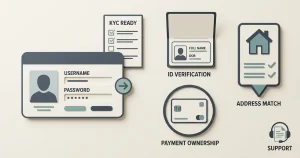
Know Your Customer checks are separate from the IP address a casino sees. KYC is the process through which an operator verifies account details and identity. A VPN cannot provide those documents, confirm who is using an account or make inconsistent details match.
Treat the VPN as a network tool, not an identity tool. If a site asks you to verify your details, masking your IP does not remove that requirement. Nor should a changed IP be taken as proof that an operator will accept a player from the UK; the site’s own conditions and access controls still matter.
When using one, consistency matters
If you are using a VPN with a site whose terms allow it, keep the VPN active throughout the entire casino session. Switching it off or changing the server mid-session can change the IP address the casino sees and may trigger automated checks. That does not guarantee uninterrupted access; it simply avoids introducing an unnecessary change in the connection.
Before you sign in, distinguish between two questions: what the VPN does to your connection, and whether the casino permits that connection. The first is about routing, masking and encryption. The second is determined by the operator’s rules and systems. One does not settle the other.
How a VPN interacts with a casino
A VPN routes traffic through a server to mask your IP address and encrypt the connection, but it does not alter your identity or replace the need for KYC verification.
So, can you use a VPN to gamble online from the UK? Technically, a VPN can route a connection through a server elsewhere and encrypt the traffic. Whether a casino accepts that connection is a separate matter, and KYC remains separate too. A masked IP is not a substitute for verification.
Crypto Casinos, VPNs and the Limits of Privacy
Using cryptocurrency at a VPN-friendly casino may make the initial deposit process less demanding in some cases. For small amounts, crypto deposits can reduce location checks and the amount of KYC friction you encounter. That is a narrower benefit than anonymity: it does not mean the casino stops recording information about your visit or account.
A VPN changes the network address visible to a site, but it does not erase the other data generated when you connect. Casinos still collect device fingerprints, IP logs and browser data. Those records can remain available even when a deposit is made in crypto and the connection uses a VPN. The payment method and the connection route are only parts of the picture.
What reduced checks do—and do not—mean
Less friction at the deposit stage should not be read as a promise that identity or location checks will never occur. A casino may apply different checks as an account is used, and a low-friction deposit does not settle what information may be required later. The useful distinction is between a process that asks for less at the outset and a service that collects no personal or technical data. Those are not the same thing.
Anjouan Casino Licence in the UK: What It Means
Crypto can therefore change the feel of registration or funding without making the account invisible. If you are comparing a crypto casino with VPN access, treat reduced checks as a possible feature of the deposit process, not a privacy guarantee. The casino still has network and browser records to collect.
A VPN also does not make the device itself disappear. Device fingerprints and browser data are separate from the IP address, so concealing or changing that address does not remove every signal associated with a session. The practical point is simple: one layer of privacy is not the same as complete privacy.
Think in layers, not labels
“Crypto” and “VPN-friendly” describe payment and connection conditions; neither label tells you that no data is gathered. A more careful assessment separates three questions: what the deposit process asks for, what the casino records while you browse, and what information may be requested as account use continues. Conflating them can make a light-touch deposit seem more private than it is.
This matters especially if your expectation is that a crypto deposit will prevent a casino from noticing where or how you connect. The stated reduction in location checks applies to some small deposits; it does not mean location signals vanish. IP logs are still collected, and device fingerprints and browser data remain part of the information picture.
Privacy Limits
Using a VPN and crypto does not make you invisible; casinos still collect device fingerprints, IP logs, and browser data.
If privacy is your main criterion, avoid treating the payment option as the whole answer. Consider whether you are comfortable with the casino retaining technical records even when you use a VPN and fund the account with crypto. The combination may reduce some checks, but it does not remove the casino’s ability to collect connection and device data.
A lower-friction deposit is a limited convenience, not a cloak. The distinction is easy to miss when payment and VPN access are discussed together, but it is the one worth keeping clear.
What to Check on a VPN-Friendly Casino Site Before Depositing
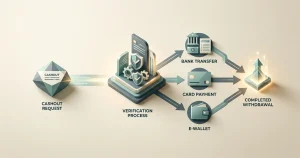
Before putting money into an offshore casino that accepts VPN connections, read the account and withdrawal terms as carefully as the welcome offer. The key details are when identity documents may be requested, which payment methods are available for cashing out, and how long the operator says each route takes. A payment option shown beside the deposit form is not necessarily available for withdrawals.
Find the KYC trigger
Some offshore casinos permit small withdrawals without documents, then require identity checks once an account’s withdrawals pass a stated threshold. One threshold reported for some sites is £1,000, or the equivalent in cryptocurrency. Treat that as a site-specific condition, not a standard rule: the relevant figure and the documents required can differ between operators.
Look for the threshold in the withdrawal, verification or account terms before depositing. Check whether it applies to a single withdrawal or to a larger account total, and whether verification can be requested earlier. Do not assume that a small withdrawal will be paid without checks simply because the site allows it in some cases. The operator’s wording governs the account.
Non-UKGC Licensed Casinos: Rules and Risks
KYC can also affect timing. If documents are requested, the payment process may pause while the casino reviews them. Make sure the name and payment details on your account match the details you can verify. A withdrawal method that looks quick on paper is less useful if the account is not ready for review.
Compare the stated cash-out windows
A specialist review gives a stated window of 1–5 days for fiat withdrawals by e-wallet or bank transfer at VPN-friendly casinos. That is a reported estimate, not a promise for every operator or transaction. Read the casino’s own terms for its processing stage and any additional time taken by the payment provider.
The same review material puts e-wallet withdrawals at about a day. That can make an e-wallet a useful option to compare when timing matters, but check that the specific e-wallet is accepted for withdrawals, not just deposits. Also look for any difference between the operator’s approval time and the provider’s transfer time; the displayed estimate may not describe both stages.
Bank card withdrawals are described as rare in specialist reviews of VPN-friendly casinos. If a card appears among deposit options, do not infer that winnings can be returned to it. Confirm the available cash-out routes before funding the account, and identify a workable alternative if card withdrawals are not offered.
Read the terms as a single process
For each payment method, note the stated processing window, whether it can be used for both deposits and withdrawals, and whether verification may be required before payment. Then compare those details against the KYC threshold. A low threshold for document checks may matter more to you than a short quoted payout window, while another player may prioritise having a withdrawal route they already use.
Before Depositing
- Identify the KYC trigger threshold for withdrawals
- Verify which payment methods are available for cashing out
- Check the stated processing windows for each withdrawal route
- Confirm that account and payment details match your verification documents
Keep a record of the relevant terms when you open the account. Payment methods and account conditions can change, so the information visible at registration may not be identical to what appears later. If the withdrawal rules are unclear, ask the operator to clarify them before depositing rather than trying to resolve the ambiguity after requesting a payout. That is the point of checking first.
Are VPNs Allowed at UK Casinos?
There is a difference between what the law prohibits and what a casino’s systems accept. In the UK, using a VPN while gambling is not, by itself, a criminal offence. That does not mean a VPN connection will work at a UKGC-licensed casino or that an operator must accept it.
Most UKGC-licensed operators block VPN connections. They also have a legal duty to establish where a customer is located. A VPN changes the apparent network location, so it can conflict with the checks an operator must carry out. The operator may therefore refuse the connection under its own access controls, even though the use of the VPN is not itself criminalised.
For you, the practical distinction is straightforward: the law’s treatment of VPN use is not the same as a casino’s access policy. A site can restrict connections made through VPNs, and trying to connect does not override that restriction. Nor does the fact that VPN use is not a criminal offence turn access into a right.
Jackpot Mobile Casinos in the UK: Games and Payouts
If you are asking whether VPNs are allowed at online casinos, the answer depends on the operator. At UKGC-licensed casinos, expect VPN connections to be blocked rather than treated as a supported way to access the service. Follow the operator’s stated rules instead of assuming that a connection which technically works is permitted.
This distinction matters because location verification is an operator obligation, while connection blocking is an access-control decision. They are related, but not interchangeable: one concerns the checks a licensed operator must make; the other concerns whether its systems let a particular connection through. A VPN cannot change the operator’s obligations, and the absence of a criminal offence does not require the casino to accept the connection.
Legal status and access are separate questions. That is the point.
Bitcoin Withdrawals at VPN-Friendly Casinos
A specialist review of VPN-friendly casinos reports that crypto withdrawals, including Bitcoin, may be processed within minutes to a few hours. Treat that as a reported processing window, not a promise that a particular casino will send your funds within it. The timing is not established across all operators, and a review’s account may not reflect the terms or performance you encounter.
When comparing a VPN-friendly Bitcoin casino, look for the operator’s own withdrawal conditions and the wording it uses about processing. A stated estimate is different from a guaranteed time. If the site does not make the distinction clear, do not treat a short window repeated in promotional material as a dependable cash-out commitment.
Bitcoin Processing
Reported windows for crypto withdrawals often refer to the casino’s processing time, not the time it takes for the transaction to be recorded on the blockchain.
Bitcoin also involves a transaction being recorded on its network after the casino processes the withdrawal. That does not make the review’s time a reliable estimate of when funds will be available in your wallet: the reported window concerns casino processing, while the outcome for an individual withdrawal can differ. Do not assume the casino’s estimate covers every step.
For a useful comparison, record the reported window, whether the operator presents it as an estimate or a commitment, and any conditions attached to the withdrawal. Keep the source in view: a specialist review can describe an observed or reported experience, but it is not the operator’s own binding terms. Where the operator’s information differs, rely on the terms shown by that operator before you decide whether its timing suits you.
This keeps the comparison focused on what can actually be assessed: the published cash-out conditions and the limits of any timing claim. A fast-sounding estimate is not enough on its own. For Bitcoin withdrawals, precision matters more than a confident headline.
Why a Casino VPN Connection Can Still Fail
A casino VPN connection can fail before you reach a game because changing your IP address does not guarantee that a site will accept the connection. UKGC-licensed casinos may block VPN traffic, so an IP address routed through a VPN can trigger an access restriction. The connection may be refused even if your account details are correct.
That is an access check, not an identity check. Know-your-customer verification is a separate process: a VPN does not confirm who you are or replace any checks the casino requires. Passing one step does not mean you have passed the other. A working login, for instance, is not proof that identity verification is complete.
Non-UK Registered Casinos: Licensing and Player Rights
Keep the distinction clear: the VPN changes the network address visible to the casino, while verification concerns your identity. Neither outcome settles the other. If a site’s terms permit VPN access, keep the connection active for the whole session; a change in your IP during play may affect access controls. This does not make VPN use safe or permitted at a UKGC-licensed casino.
If access is blocked, repeatedly changing servers will not resolve a separate KYC request. Nor does a different IP turn a failed identity check into a successful one. Treat connection access and account verification as separate conditions, and follow the operator’s stated requirements rather than assuming that a VPN has bypassed them. Different checks, different outcomes.
Casinos That Allow VPNs: The Risks for UK Players
Playing at an offshore casino is not illegal for a UK resident, but that does not make the site part of the UK regulatory system. Offshore operators are not regulated by the UK Gambling Commission and have no obligation to follow UK gambling laws. If you play there, you give up UK consumer protections that apply at UKGC-licensed operators.
There is also no GamStop self-exclusion tool at offshore casinos. If you rely on GamStop to block access to gambling, a VPN-friendly site will not provide that safeguard. The distinction matters: connection access is not the same as regulated protection.
Hiding your location with a VPN can create a separate account risk. If an operator decides that your location or VPN use breaches its terms, it may close your account and confiscate winnings. A connection that works when you register is no assurance that the operator will accept it later, including when you request a withdrawal.
VPN policies can change without notice. Read the current terms before depositing, and do not assume that a site’s past acceptance of VPN traffic still applies. If the terms exclude UK players, playing from the UK may lead to account closure after a win. That is a costly place to discover a policy difference.
Why do UK players use VPNs for casinos?
You can use a VPN to mask your IP address and get around access restrictions imposed by UK internet service providers. It also encrypts your connection, helping protect your personal information from hackers and cybercriminals.
Should you use a VPN for online casinos?
You can, and using a VPN to gamble online is not criminalised by UK law. However, playing at an offshore casino that allows VPNs means you give up UK consumer protections, and offshore casinos do not provide GamStop self-exclusion tools.
Do VPN-friendly casinos accept cryptocurrencies?
Yes, VPN-friendly casinos may accept cryptocurrency deposits and offer crypto withdrawals. Crypto withdrawals are typically processed within minutes to a few hours, though KYC checks may still apply.
Do VPN-friendly casinos pay out winnings?
Yes, they process withdrawals, but checks may apply: some casinos allow small withdrawals without documents and request KYC after a larger threshold, often £1,000 or its crypto equivalent. Fiat withdrawals by e-wallet or bank transfer take 1–5 days; crypto withdrawals take minutes to a few hours.
How do I withdraw winnings from a VPN casino?
You can withdraw by e-wallet or bank transfer, with fiat withdrawals taking 1–5 days, or by cryptocurrency, which takes minutes to a few hours. E-wallet withdrawals take about a day, while bank card withdrawals are rare.
Can I use a VPN to play at online casinos in the UK?
Yes, using a VPN to gamble online is not criminalised by UK law, and it is not illegal for a UK resident to play at an offshore casino. Most UKGC-licensed operators block VPN connections, and playing at an offshore casino means you forfeit UK consumer protections.
Material created by the team Betmac Casino