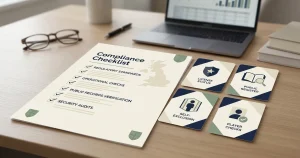
GamStop blocks access across participating UK gambling operators, while each casino’s own exclusion applies to that business.
How GamStop Works for Online Gambling
GamStop is Great Britain’s national online self-exclusion scheme. It is designed to let you make one request that applies across participating licensed gambling websites and apps, rather than contacting each online operator separately. The important distinction is scope: GamStop works across multiple operators, while an individual casino’s own self-exclusion arrangement concerns that business.
For someone comparing European online casinos, the country where a website appears to be based is not the only relevant detail. GamStop’s role is to block access across participating licensed online gambling services within its scheme. It is not a rating system for casinos, nor a way to compare games, payments or offers. Its purpose is self-exclusion: restricting your access to gambling accounts across participating operators.
One request, multiple participating operators
You can register for online self-exclusion through GAMSTOP ONLINE with one request. The scheme then blocks access to current gambling accounts, and prevents new accounts being created, with participating operators across the UK. That multi-operator reach is what makes it different from asking one casino to exclude you on its own.
If you’re looking at non-GamStop European casinos in 2026, payout timing is one detail worth checking. Use the listed information as a starting point and review each casino’s terms before deciding.
1. SlotoSport
Payout speed: 1-3 business days The stated payout speed for SlotoSport is 1–3 business days, giving you a clear timing estimate to consider.
2. Chanze
Payout speed: 1-3 business days Chanze lists a payout speed of 1–3 business days, which gives you a stated timeframe to bear in mind.
3. x3bet
Payout speed: 1-3 business days The available payout-speed information for x3bet is 1–3 business days, so you have a specific estimate to consider.
4. Zombillion
Payout speed: 1-3 business days Zombillion’s stated payout speed is 1–3 business days, providing you with a timeframe to factor into your choice.
5. NightLuck
Payout speed: 1-3 business days NightLuck lists payouts as taking 1–3 business days, a useful timing detail for you to consider.
6. EvoSpin
Payout speed: 1-3 business days The stated payout speed for EvoSpin is 1–3 business days, giving you a clear estimate to keep in mind.
7. Dieselwin
Payout speed: 1-3 business days Dieselwin’s listed payout speed is 1–3 business days, providing you with a stated timeframe.
8. SpinFormula
Payout speed: 1-3 business days SpinFormula lists a payout speed of 1–3 business days, which you can use as one consideration.
9. Revery Play
Payout speed: 1-3 business days The available payout-speed detail for Revery Play is 1–3 business days, giving you a timeframe to consider.
10. NightWin
Payout speed: 1-3 business days NightWin states a payout speed of 1–3 business days, so you have a specific timing estimate to bear in mind.
The block applies to participating licensed online gambling websites and apps. It is not limited to a particular casino game or to one brand’s website. If an operator participates in the scheme, the aim is that your exclusion applies there too, rather than leaving you to repeat the same request with every participating business.
This can matter when you have accounts with more than one operator. A separate request to each business would require you to identify and contact them individually. GamStop brings the online exclusion request into one process and extends it across the participating operators covered by the scheme. One request, broader reach.
What “participating” means
The word “participating” sets a boundary. GamStop is a multi-operator scheme, but its reach is defined by the operators and services included in it. It should not be treated as a universal block on every gambling website a person might encounter online. The scheme’s stated coverage is participating licensed online gambling websites and apps.
That boundary is worth keeping clear when you are looking at an online European casino or considering different casino sites. A website’s appearance, language or use of the word “European” does not explain whether it is covered by GamStop. The relevant question for the scheme is whether the gambling operator participates in it. Do not assume that a search result, brand name or website address tells you that.
If you have self-excluded, do not try to get around the restriction by opening another account elsewhere. An exclusion is intended to interrupt access, not to prompt a search for a different route back to gambling. If you are uncertain about your own status or the coverage of an account, check directly with GamStop or the operator rather than testing access by attempting to gamble.
Non-GamStop Curaçao Casino Sites: UK Guide
Accounts and access
GamStop’s function concerns access to online gambling accounts with participating operators. The scheme is meant to prevent you from using existing accounts and from creating new ones within its participating network. It therefore differs from simply closing a single account at one casino: the multi-operator structure is central to how the scheme works.
That does not make every online service part of GamStop. Nor does it mean that a person’s entire internet access is restricted. The effect described by the scheme relates to gambling accounts and participating online gambling services. Keeping that scope in mind helps you assess what the registration is intended to do without assuming it controls websites beyond the scheme.
For a reader weighing up the best European online casinos, the relevant point here is not a ranking. GamStop is a self-exclusion tool, not a measure of which casino offers the best experience. If self-exclusion is what you need, the useful criterion is whether the scheme’s multi-operator coverage applies to the gambling accounts you are trying to avoid.
A practical way to think about the scheme
Think of GamStop as a single online self-exclusion request with reach across participating licensed operators in Great Britain. It brings multiple websites and apps within one scheme, instead of making each operator a separate starting point. The coverage is broad within that network, but it is still defined by participation.
This distinction helps prevent two opposite assumptions: that GamStop only affects one casino, or that it automatically blocks every gambling website. Neither describes its stated role. It is a national, multi-operator scheme for online gambling, working across participating licensed services.
Do not try to get around your self-exclusion restriction by opening another account elsewhere; an exclusion is intended to interrupt access, not to prompt a search for a different route back to gambling.
If you are considering self-exclusion, focus first on the purpose of the request: restricting your access across the participating online operators covered by GamStop. Do not treat another account as a workaround. The scheme is built to make a single decision apply across multiple gambling sites and apps.
European Casinos Outside GamStop: What That Means for You
“European casino” describes a location or market claim; it does not tell you whether a site is authorised to serve customers in Great Britain. The important distinction is whether the operator holds a UK Gambling Commission licence and participates in GamStop. Since 31 March 2020, online operators licensed by the Commission have been required to join the scheme. A UK-regulated casino must therefore block access for customers who are self-excluded through GamStop.
A site described as a non-GamStop European casino sits outside that shared exclusion system. That may be because it does not hold a UK licence, rather than because it offers a different version of GamStop. The label alone does not establish where a company is based, what permissions it holds, or what protections it provides. Geography is not a licence.
Non-UK Registered Casinos: Licensing and Player Rights
That distinction matters if you have an active self-exclusion agreement. Trying to gamble at a non-GamStop casino could go against the terms you agreed to, even if the website accepts your registration. The fact that a site is reachable does not mean it is an appropriate way to get around an exclusion. Do not open an account elsewhere to bypass one. Self-excluded customers should be turned away by the gambling businesses and venues they excluded themselves from.
For British customers, remote operators offering gambling must hold a UK Gambling Commission licence. Online gambling is legal in the UK only through licensed and regulated sites. A foreign licence does not replace the UK licence required to serve this market. Offshore sites may still be accessible, but they operate outside the UK regulatory system; access should not be mistaken for UK authorisation or equivalent safeguards.
The legal position for the player is distinct from the operator’s obligations: a player does not face a fine or criminal prosecution merely for using an offshore casino without a UK licence. That does not make the arrangement safe or remove the risk of breaching your own self-exclusion terms. Nor can the regulator refund money you have spent gambling.
If gambling is becoming difficult to avoid, treat the exclusion as a boundary to maintain, not a restriction to test. Exclude yourself from every place where you may be tempted to gamble, including individual sites outside GamStop, and do not seek another account as a workaround. Gambling businesses are required to offer self-exclusion, but a scheme covering UK-licensed operators cannot be assumed to block access to every site operating beyond it.
The practical comparison is not “European” against “British”. It is whether the operator is licensed to serve you in Great Britain, whether it participates in the relevant exclusion protections, and whether gambling there would conflict with an agreement you have made. If you are already self-excluded, the safest choice is not to gamble elsewhere. No workaround.
Bypassing Exclusion
Trying to gamble at a non-GamStop casino to get around a self-exclusion agreement could breach your terms and does not remove the underlying risk.
Roulette, Self-Exclusion and the Limits of a Game-Specific View
A search for a European roulette table can make the decision seem narrowly about the game: which casino offers the right version, what the experience is like, or whether a premium or VIP setting is available. If you have self-excluded, however, the key question is not which roulette table you prefer. It is whether you have agreed not to gamble with that business or across the operators covered by your exclusion.
Self-exclusion is a request to a gambling company to stop you betting with it for a set period. If you have excluded yourself from a website, the restriction is not a choice of games within that website. It applies to gambling access there. A roulette table does not become a separate route around the agreement because it has a different name, layout or level of service.
The same principle matters when you consider a different casino. A self-excluded customer is refused service by the venues and websites they excluded themselves from. Trying another website to keep playing roulette may therefore go beyond what your exclusion permits. If your agreement covers multiple online operators, moving to a site outside that group does not make the underlying risk disappear. Non-GamStop casinos could also put you in breach of your self-exclusion terms. Do not open another account elsewhere to get around an exclusion.
The table is not the deciding criterion
Comparisons of online roulette can focus on features of the game or the way a casino presents its tables. Those criteria may be relevant to someone who is free to gamble, but they do not determine whether you should play while self-excluded. Nor does a premium label or VIP offer change the meaning of an agreement not to gamble with a business.
British Casinos Not on GamStop: Rules and Risks
The useful comparison is between the scope of your exclusion and the gambling access you are considering. If you excluded yourself from a particular casino, do not try to enter through another account or another game on that site. If you used a multi-operator scheme, do not assume a different roulette product or a different operator makes it acceptable to gamble. Check the terms of the exclusion rather than treating the game title as the boundary.
For UK players, an operator offering online gambling to customers in Great Britain must hold a UK Gambling Commission licence. UK-licensed online operators are required to participate in GamStop. A casino described as European, premium or VIP is not thereby outside the UK rules if it serves British customers. Conversely, a website outside the UK regulatory system is not a safe workaround: gambling there could breach your exclusion agreement, and it does not provide the protection of a UK licence. The label on the roulette page is not a safeguard.
Decide by the agreement, not the variant
If you are looking for the best European roulette experience, the better criterion while an exclusion is active is whether the site is within its scope—not the table’s presentation. A casino cannot be a suitable choice for you simply because it offers a preferred roulette format or advertises a more exclusive setting. Those features do not cancel the commitment you made.
Make the exclusion broad enough to cover the places where you might be tempted to gamble. If roulette is the game that draws you back, include the relevant gambling businesses in your plan rather than trying to isolate roulette from other forms of betting. Self-exclusion is about stopping access to gambling with the business or businesses you chose, not about blocking one game while leaving another route open.
Do
- Treat the exclusion as a boundary to maintain
- Include all tempting venues in your exclusion plan
- Contact the scheme or business for clarification
Don’t
- Use a different roulette variant to bypass a block
- Open another account to get around an exclusion
- Assume a game-specific exception exists
If you are uncertain whether a particular site falls within your agreement, do not deposit or attempt to play while you work it out. Contact the scheme or gambling business responsible for the exclusion and ask for clarification. A failed attempt to find a loophole is still an attempt to gamble; it does not make the agreement game-specific.
There is no roulette-based exception to self-exclusion. Whether a page is described as European, online, premium or VIP, the relevant point is whether you have excluded yourself from that gambling business or from the operators covered by your agreement. When the answer is yes, do not play there—and do not switch sites to get around it. The game is not the boundary.
Casino Sites and Self-Exclusion: What to Check Before You Play
When you assess a casino’s safeguards, look for a clear way to request self-exclusion from that business. This is a different check from comparing games, bonuses or payment methods: the practical question is whether you can find the procedure and reach the people responsible for applying it.
Gambling businesses must offer self-exclusion by law. For an individual website or app, start with its Responsible Gambling or Safer Gambling page. Follow the instructions there to make your request. If the procedure is not explained or you cannot find it, contact customer services and ask how to self-exclude from that business.
Before you send the request, make sure you are using the correct account and that you understand what action you are asking the business to take. Keep a copy of any confirmation or correspondence. Those records can help you establish what you requested and when; they do not replace the casino’s responsibility to act on the agreement.
Non-Gamban Casinos in the UK: What It Means
What the business must do
Once a self-exclusion agreement has been made, the gambling business must close your account, return any funds held in it and remove your details from its marketing databases. These are concrete responsibilities, not optional features to weigh against a larger games catalogue.
If you are reviewing a casino before opening an account, check whether its safer-gambling information explains how to make a request and how to contact customer services. A procedure that is difficult to locate leaves you with less clarity about how to act if you need it. The useful comparison is straightforward: can you identify the route, submit a request and retain a record of the response?
Self-exclusion from one casino applies to that business. It should not be treated as a way to manage access everywhere, and it does not make a different site a safe workaround. If you have excluded yourself and feel tempted to gamble elsewhere, do not open another account to get around the agreement. Playing at a non-GamStop casino could breach the terms of an existing self-exclusion agreement.
Check the process, not the sales pitch
European branding, a large selection of slots or a welcome promotion cannot tell you how a casino will handle an exclusion request. Look for the actual instructions and the customer-service route, rather than relying on general claims about responsible play. If you cannot establish how to request self-exclusion, that uncertainty is itself relevant when deciding whether to register.
Check Your Safeguards
- Locate the Responsible Gambling or Safer Gambling page
- Identify the procedure for requesting self-exclusion
- Find the direct route to contact customer services
- Keep a copy of all confirmation and correspondence
After an agreement is in place, the key checks are whether the account is closed, the remaining balance is returned and marketing contact stops. If a message about gambling promotions arrives after you have asked to be excluded, keep it and contact the business to raise the issue. Do not assume that continuing to receive marketing means the exclusion has been cancelled; ask the business to clarify and address the problem.
The same approach applies whether a casino offers slots, table games or both. A game-specific preference does not change the request: you are asking that business to stop you gambling with it. Clear instructions matter. A polished homepage matters less.
No-Deposit Bonuses: Why This Guide Cannot Verify an Offer
A no-deposit bonus is presented as a reward that does not require an initial deposit. The label alone, however, does not tell you what you would receive, whether you could claim it, or what rules would apply before any winnings could be withdrawn. Those details need to be established for a specific offer and operator; they cannot be inferred from the phrase “no deposit”.
That distinction matters when comparing European casinos advertising a free bonus. A headline may sound clear while leaving the practical terms unanswered.
For a UK player, the operator’s status is a separate and more important check. A business that offers remote gambling to customers in Great Britain must hold the relevant UK Gambling Commission licence, regardless of where it is based. Online gambling is legal in the UK only through licensed and regulated sites. A casino being described as European does not, by itself, establish that it is authorised to serve you.
Online casino no registration in the UK: checks
If you are considering an offer, look for the operator’s own terms and identify the exact promotion they cover. Check whether the offer is currently available to you, what actions are required to claim it, and what restrictions apply to use or withdrawal. If those points are not clear and confirmed, do not treat the bonus as a usable benefit. A headline is not a set of terms.
There is also a more basic comparison criterion: whether the offer changes your decision to gamble. A bonus should not be a reason to open an account with another operator, particularly if you have an active self-exclusion agreement. Gambling businesses must provide self-exclusion, and playing at a non-GamStop casino could breach the terms of an existing agreement. Do not try to work around an exclusion to claim a promotion.
The phrase “best European casino no-deposit bonus” sounds like a request for a simple winner, but there is no meaningful winner without confirmed offers and comparable terms. For you, the relevant standard is evidence: a named operator, an applicable offer, clear conditions and a lawful basis for serving UK customers. If any of those are missing, the bonus should not count as a reason to choose that casino. No confirmed terms, no fair comparison.
Legal Requirements
For UK players, any operator offering remote gambling in Great Britain must hold a UK Gambling Commission licence, regardless of where the business is based.
Choosing a Casino by Its Self-Exclusion Safeguards
A useful comparison starts with one practical criterion: does the gambling business provide self-exclusion and take reasonable steps to stop an excluded customer from gambling? A polished games lobby or a broad selection of European casino games does not answer that question. Safeguards do.
Gambling businesses must offer self-exclusion. That is a requirement, not an optional feature to award as a bonus point. The meaningful distinction is whether the business treats an exclusion as a serious restriction on access, rather than merely displaying a responsible-gambling link.
A safeguards-first comparison
When assessing a casino, consider the evidence in this order:
- Is self-exclusion available? The business should provide a way for a customer to make a formal agreement not to gamble with it.
- Does the business act on that agreement? Gambling businesses must take reasonable steps to prevent self-excluded customers from gambling. A stated policy matters only if the operator follows it.
- Does your comparison reflect your circumstances? A casino’s safeguards can only be assessed against the specific protection you need. There is no meaningful universal “best” if one option meets your needs and another does not.
This is a more useful basis for choosing than a European casino list based on games or presentation alone. It also avoids treating a casino as suitable simply because it offers roulette, slots or other familiar games. Those features do not establish how effectively it handles self-exclusion.
If you already have an active exclusion, do not open an account elsewhere to get around it. Gambling at a non-GamStop casino could breach the terms of your self-exclusion agreement. Instead, exclude yourself from every place where you may be tempted to gamble, and follow the agreement you have made. No loophole. Just the terms.
What a comparison cannot prove
A written promise is not, by itself, proof of how a business handles every case. Nor does a games catalogue, a welcome offer or a label such as “European” tell you whether the operator will take reasonable steps to block an excluded customer. Keep the comparison focused on the safeguard itself.
For UK customers, remote operators serving the British market must hold a Gambling Commission licence. A casino operating outside that system should not be treated as equivalent to a UK-licensed business simply because it is accessible or uses a European identity. If you are self-excluded, access elsewhere is not evidence that your agreement has ended.
The strongest choice, by this criterion, is the business that provides self-exclusion and acts to prevent excluded customers from gambling. That is a safeguards-based judgement, not a ranking of the best European casinos or roulette sites. If gambling has become difficult to control, choose exclusion across the places where you might play rather than searching for another account. The regulator cannot refund money already spent gambling.
What UK Players Should Know About Exclusion and Casino Access
For a player in Great Britain, “European” describes a location, not permission to offer gambling in the UK. A remote operator serving customers here must hold a UK Gambling Commission licence. An overseas casino without that licence sits outside the UK regulatory system; its location does not make it a legal UK casino.
If you want to stop gambling with UK-licensed online casinos, you can register with GamStop. During the fixed period you select, the scheme blocks access to UKGC-licensed gambling platforms. Gambling businesses must also provide a way to self-exclude directly from their services. These are safeguards, not a reason to look for another account elsewhere: playing at a non-GamStop casino could breach your self-exclusion terms. Exclude yourself from every place where you may be tempted to gamble.
What access means in practice
A site accepting a UK registration is not necessarily authorised to serve UK customers. For legal online gambling in the UK, the operator must hold the relevant UKGC licence. Before allowing you to deposit into a gambling account, an operator must verify your age. UK-licensed casinos must provide responsible-gambling tools, including self-exclusion, and must offer an internal complaints process with access to an approved Alternative Dispute Resolution service.
UKGC Licence Requirements
UK-licensed casinos must provide responsible-gambling tools, including self-exclusion, and must offer an internal complaints process with access to an approved Alternative Dispute Resolution service.
The rules also shape how gambling works. Online slot autoplay is banned in Britain, and each online slot spin must last at least 2.5 seconds. Remote operators cannot accept credit-card payments for gambling, including credit-card funds routed through a money service business. They also cannot accept wallet payments if the wallet lets credit-card funds be used for gambling.
New customers must be prompted to set a financial limit before making a first deposit, and account-level limit controls must be accessible. Those controls are separate from self-exclusion: a limit does not block gambling in the way an exclusion does.
When comparing European online casinos for UK players, the decisive criterion is not a label, game selection or claim of access. It is whether the operator is authorised to serve the UK and whether its safeguards match your needs. There is no single “best” choice independent of those criteria. If you are already self-excluded, do not open an account elsewhere to get around the agreement.
If gambling has caused harm, remember that the regulator cannot refund money you have spent. Exclusion is about restricting future access, not recovering losses. The boundary matters.
Crypto Casinos and the Evidence This Guide Can Confirm
Crypto may be part of what you are looking for when comparing European casino sites, but a payment method does not tell you whether a casino is suitable for a UK player. Nor does the word “European” establish that an operator is authorised to serve customers in Great Britain. Remote gambling operators serving the British market must hold a UK Gambling Commission licence; a foreign location or a crypto option does not replace that requirement.
The useful comparison is therefore not simply which site mentions digital currency. Check whether the operator is licensed for the British market and whether its safeguards fit your circumstances. A list of “top” crypto casinos would imply that those operators and their features had been assessed against consistent criteria.
Most importantly, crypto does not create an exception to self-exclusion. Self-exclusion is a formal agreement not to gamble, and you are responsible for keeping to it. If you have excluded yourself, do not open an account elsewhere or switch to a non-GamStop casino to get around the restriction. Gambling there could breach your self-exclusion terms, regardless of how you fund an account or where the operator is based.
That distinction matters because two separate questions can otherwise blur together: whether a payment option is offered, and whether you should gamble at all. A coin, wallet or other payment route cannot answer the second question. If you are self-excluded, treat the agreement as applying to your decision to gamble, rather than as a restriction limited to a particular currency or casino label.
For a UK player, the defensible criterion is clear: does the operator hold the relevant UK licence, and are you free of an active self-exclusion agreement? If the answer to the latter is no, do not seek another route to play. If you are comparing sites while eligible to gamble, assess the operator’s authorisation and safeguards before considering payment preferences. Crypto alone is not a measure of safety.
Crypto and Exclusion
Digital currency payment options do not create an exception to self-exclusion agreements or replace the requirement for a UK Gambling Commission licence.
Real-Money Gambling and Your Self-Exclusion Agreement
Self-exclusion is a formal agreement: you ask a gambling company to stop you betting with it for a set period, and you are responsible for keeping to that agreement. The restriction is not a casual preference that can be set aside when a new site or promotion appears. Treat it as a firm commitment not to gamble.
That matters when considering a European casino offering real-money play to people in Britain. Operators serving the British market must hold a UK Gambling Commission licence, and gambling businesses are required to offer self-exclusion. A site outside that regulatory system is not a lawful alternative for real-money gambling in the UK. Nor does a different country’s branding change the terms of an exclusion you have already made.
If you have self-excluded, do not open an account elsewhere to get around it. Playing at a non-GamStop casino could breach the terms of your self-exclusion, even if that site accepts your registration. European real-money casinos and free spins may appear to be separate choices, but neither makes gambling consistent with an agreement not to gamble. A new offer is still an invitation to play.
The practical test is straightforward: would you be tempted to place a bet there? If so, include that venue or website in the places from which you exclude yourself. A wider boundary is more useful than leaving an obvious route back to gambling. Do not rely on a site’s location or marketing to decide whether your agreement applies; take the agreement seriously and avoid gambling.
Self-exclusion is not a way to recover money already spent, and the regulator cannot refund gambling losses. Its purpose is to prevent further gambling with the businesses covered by the agreement. If you are struggling to stick to it, seek support rather than looking for another real-money account. The responsibility is yours, but you do not have to deal with the difficulty alone.
Keep the distinction clear: an account being available does not mean you should use it. Where you have agreed to stop gambling, the safer choice is not to deposit, not to play, and not to test whether another casino will let you in. A loophole is not a safeguard.
Casino Guides for UK Deposits, Apps and Licensing
GamStop Removal: The Waiting Period and What Happens Next
Removing a GamStop exclusion is a separate process from asking a casino to close an account. You must contact GamStop directly; an operator cannot remove the scheme-wide restriction on your behalf.
How the request proceeds
GamStop first needs to verify your identity. The 24-hour cooling-off period starts only after that check is complete, and your self-exclusion stays active throughout it. There is no route to immediate access during this interval.
The pause gives you time to reconsider. If you decide you want to remain excluded, contact GamStop during the cooling-off period and ask to cancel the removal request. Your exclusion will then continue. Do not treat a pending request as permission to gamble: access remains restricted until the process is complete.
Once GamStop has processed a removal, its updated status may not appear at every operator straight away. Operators can need an additional 24 to 48 hours to update their systems. That is an implementation delay, not a reason to open another account elsewhere or try a casino that is not covered by GamStop. Playing at a non-GamStop casino while your self-exclusion agreement is active could breach its terms.
Before you decide
Use the time to consider why you registered and whether removing the restriction is right for you. If you still want to gamble, wait until the scheme’s process and operators’ updates are complete rather than testing access in the meantime. If you want to keep the protection, contact GamStop before the cooling-off period ends.
Removal does not undo past gambling or recover money you have spent. The Gambling Commission cannot provide refunds for gambling losses. If you are uncertain, maintaining the exclusion is an available choice; you do not have to proceed simply because you started a request.
The practical sequence is straightforward: contact GamStop, complete identity verification, allow the cooling-off period to run, and then allow operators time to reflect the change. A removal request is not an instant switch.
How does self-exclusion work?
You identify the gambling venues or websites you want to exclude yourself from, provide information to confirm your identity, choose a duration and receive confirmation. A self-exclusion agreement means the business must close your account, return any funds and take reasonable steps to prevent you from gambling there.
How do I return from self-exclusion?
To end a GamStop exclusion, contact GamStop directly and request removal. There is a 24-hour cooling-off period, which you can cancel by asking GamStop to keep your exclusion in place; after removal, operators may take a further 24 to 48 hours to update your status.
How does GamStop benefit me?
GamStop lets you make one free request to block access to existing accounts and prevent new accounts across participating UK-licensed online gambling operators. This means you do not have to contact each participating operator separately.
How long does it take for GamStop to become active after sign-up?
The 24-hour cooling-off period begins once your identity has been verified, and your exclusion remains active during that period.
How does a non-GamStop casino handle self-exclusion?
You can request self-exclusion from an individual online casino through its Responsible Gambling or Safer Gambling page, or by contacting customer services. This applies to that business rather than providing GamStop’s multi-operator coverage.
What self-exclusion options are available at non-GamStop casinos?
You can request exclusion from an individual casino through its Responsible Gambling or Safer Gambling page, or contact its customer services for instructions. GamStop, by contrast, covers participating UK-licensed online operators.
Material created by the team Betmac Casino