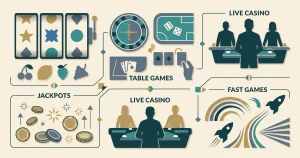
Entry costs, tournament formats, scoring and rewards all vary, so the event terms determine what participation involves.
Free Slot Tournaments: What “Free Entry” Means
“Free entry” describes the cost of joining a tournament. It does not, by itself, tell you what you must do before taking part or what the competition involves. A specialist review describes online slot tournaments as having different entry conditions: some can be entered without paying, while others require a ticket or a buy-in. Treat the label as a starting point, then read the event’s own terms to establish which condition applies.
For a genuinely free-to-enter tournament, joining does not require a separate payment or a ticket that you have to obtain. That makes the entry cost different from a buy-in competition, where payment is part of participation, or a ticketed event, where access depends on holding the required ticket. Those distinctions matter even if all three events appear in the same casino tournament lobby.
Free entry is not the same as free play
A tournament can be free to enter without making every part of the surrounding casino activity free. Check whether the event requires a deposit, a qualifying action or a particular account status before you can join. Do not assume that “free” settles those points: the wording might refer only to the tournament entry itself.
When choosing an online casino tournament in the UK, you may want to consider how quickly you can receive a payout as well as the tournament itself. This list gives you the payout-speed information available for each operator.
1. SlotoSport
Payout speed: 1-3 business days SlotoSport lists a payout speed of 1–3 business days. You can use that as one practical detail when considering its tournaments.
2. Chanze
Payout speed: 1-3 business days Chanze lists a payout speed of 1–3 business days. You can factor this into your choice if payout timing matters to you.
3. x3bet
Payout speed: 1-3 business days x3bet lists a payout speed of 1–3 business days. This gives you a stated payout timeframe to consider alongside tournament details.
4. Zombillion
Payout speed: 1-3 business days Zombillion lists a payout speed of 1–3 business days. You can weigh that stated timeframe when deciding whether to explore its tournaments.
5. NightLuck
Payout speed: 1-3 business days NightLuck lists a payout speed of 1–3 business days. If payout timing is part of your decision, this is a useful detail to keep in mind.
6. EvoSpin
Payout speed: 1-3 business days EvoSpin lists a payout speed of 1–3 business days. You can consider this timeframe when looking into its tournament offering.
7. Dieselwin
Payout speed: 1-3 business days Dieselwin lists a payout speed of 1–3 business days. This provides a stated payout timeframe for you to factor into your choice.
8. SpinFormula
Payout speed: 1-3 business days SpinFormula lists a payout speed of 1–3 business days. You can take this into account when assessing whether its tournaments suit you.
9. Revery Play
Payout speed: 1-3 business days Revery Play lists a payout speed of 1–3 business days. This is the available practical detail to consider alongside its tournament offering.
10. NightWin
Payout speed: 1-3 business days NightWin lists a payout speed of 1–3 business days. You can use that stated timeframe as one consideration when exploring its tournaments.
Likewise, a free-to-play slot tournament is not necessarily an ordinary slot game with no money involved anywhere. It is a competition with its own joining conditions. Read the entry instructions and any linked terms together, looking for a clear answer to three things: whether payment is required, whether a ticket is needed, and whether anything must happen before entry becomes available. If those conditions are unclear, the free-entry label alone is not enough to judge access.
Some tournament descriptions may also mention opting in. A specialist review notes that certain events require players to opt in before playing eligible games. That requirement is separate from paying a buy-in: opting in is an action that registers your participation, not evidence by itself that the event is either free or paid. Check the event page for the specific steps it sets out.
Tickets and buy-ins are different barriers
A ticket is a condition of access. You may need to hold one to enter, so check how the event says a ticket is obtained and whether you already have one. Do not treat a ticketed tournament as automatically free simply because no payment appears beside the entry button; the ticket may have its own conditions.
A buy-in, by contrast, means that paying is part of joining. The amount and payment process should be stated in the event terms. If you are comparing free slot tournaments online with buy-in events, the useful first question is not which looks more appealing, but what each requires from you before you can participate.
Online Casinos Without ID in the UK: What to Know
The distinction is practical. A no-cost entry may suit you when avoiding a tournament charge is the priority. A ticketed event may suit you if you already hold the required ticket and its terms are clear. A buy-in event calls for a direct decision about whether you are willing to pay to take part. No label removes the need to check the conditions attached to that specific event.
A quick entry check
Before joining, look for the entry condition in the tournament’s own information rather than relying on a short banner or lobby label. Confirm whether the event is described as free to enter, whether it requires a ticket or buy-in, and whether registration or another qualifying step is necessary. If several conditions appear, read them as a whole: “free” may describe one part of participation while another condition still controls access.
This is particularly useful when browsing free casino tournaments alongside paid competitions. Similar presentation does not mean identical entry rules. A clear event description should let you distinguish between paying to enter, presenting a ticket and registering without either. If you cannot tell which applies, pause before taking any action that could involve a payment.
The same check applies when a casino advertises free online slot tournaments in the UK. A promotional heading is not a substitute for the event’s terms. Focus on what you need to do to enter, not on assumptions based on the word “free”. Entry first. Everything else follows.
Do
- Read the event’s own terms to establish entry conditions
- Confirm if a ticket or qualifying action is required
- Check for a specific “opt-in” requirement
Don’t
- Assume “free entry” means no deposit or qualifying action
- Treat a ticketed tournament as automatically free
- Rely solely on a short banner or lobby label
How Slot Tournament Formats and Scoring Work
A slot tournament adds a competition rule to ordinary slot play: participants play within a defined allowance, then their results are assessed against the event’s scoring system. The allowance may be a fixed number of spins or a set period of time. A specialist review describes both approaches, but the event’s own rules determine which one applies. The format matters because it defines what counts as a completed attempt and when a player’s result stops changing.
With a spin-based format, the tournament sets a finite supply of eligible spins. Once those have been used, that player’s scoring opportunity ends. The important detail is not simply how many spins are available, but which spins qualify and whether the tournament requires any action before play begins. A player who misunderstands the allowance can spend eligible spins without realising that each one contributes to the competition.
A timed format works differently. Play is available during a stated window, and the player’s opportunity is bounded by the event clock rather than solely by a spin allowance. The clock may determine when a score can be recorded or when further play no longer counts. Read the rules for the precise start and finish conditions: a game result that appears on screen is not necessarily part of the tournament if it falls outside the eligible period.
American Roulette at UK Online Casinos: Rules
These are two ways of limiting tournament play, not two scoring systems. The allowance tells you how much eligible play is available; the scoring rule tells you how that play is converted into a ranking. Keeping those questions separate makes the rules easier to follow. A player can have a fixed set of spins but be ranked by a particular kind of win, or compete during a time window while the leaderboard measures a different result.
What the score measures
A specialist review describes several possible scoring bases: the largest win in relation to the stake, consecutive wins, or spins that return a win above a specified multiple. These criteria reward different recorded outcomes. They should not be treated as interchangeable versions of “total winnings”: a tournament’s headline score can be based on a selected event within play, rather than the overall amount returned.
For a biggest-win-relative-to-stake rule, the relevant measure is the relationship between a win and the stake attached to it. The largest qualifying result may matter more than the sum of all returns. That distinction affects how you read a leaderboard: a high position under this rule does not necessarily mean the player had the largest overall return across every spin.
A consecutive-wins rule focuses on a run of winning outcomes. The scoring question is whether wins occur in sequence under the tournament’s definition, rather than how large any one win is. The rules need to establish what counts as a win and how the run is measured. Without that definition, the phrase alone does not tell you how a particular result will be recorded.
Spin-based Format
A finite supply of eligible spins is set; once used, the scoring opportunity ends.
Timed Format
Play is available during a stated window; the event clock bounds the opportunity.
Scoring Rules
Criteria convert play into ranking, such as biggest win relative to stake or consecutive wins.
Another possible criterion counts spins whose win exceeds a specified multiple. Here, the score is tied to qualifying spins, not simply to every win. A small return may not meet the threshold, while a qualifying result may contribute to the score even if the tournament is not measuring total winnings. The stated multiple and the way qualifying spins are counted are therefore central parts of the scoring explanation.
Some online slot tournaments instead rank players by win per spin rather than total amount staked, as described in a specialist review. That changes what the ranking represents. A leaderboard based on win per spin is not a direct measure of how much each player wagered overall, so comparing positions across different scoring systems can be misleading. The label attached to a score matters; the number alone does not explain it.
Reading the rules alongside a leaderboard
A leaderboard is useful only when you know what it ranks. Check whether it displays a score, a qualifying result, or a cumulative measure, and whether the displayed order is updated as play proceeds or finalised at the end. Those details connect the scoring description to what you actually see during the event. If a leaderboard uses a short label, the tournament rules should explain its meaning.
Tie handling is another point to look for. The scoring basis may identify which results count without explaining how equal scores are ordered. The event rules govern that detail, so do not assume that a tie automatically produces shared positions or a particular outcome. The same applies to any restriction on eligible games or the treatment of interrupted play: the scoring system is only one part of the mechanics.
Online Bingo UK: Formats, Slots and How to Choose
It also helps to distinguish an individual score from a round result. In a tournament with several stages, a leaderboard may show who advances rather than who has the highest result across the entire event. A result can therefore matter for progression without becoming the final ranking. The rules should make clear which stage is being shown and when its scores stop counting.
Single-round and elimination formats
A specialist review describes two broad structures. In a single-round competition, players take part in one scoring stage and the highest score wins. The competition has no later stage in which a player must qualify again. The score is judged under that event’s stated criterion, and the final ranking follows from the completed round.
An elimination format divides play into multiple rounds. Players who do not meet the progression rule are removed from the competition, while those who qualify continue to a later stage. The qualifying condition might be expressed through a position or a score, but its exact form belongs to the tournament rules. Each round can determine who remains, so an earlier result may serve a different purpose from the final-stage score.
That difference is structural, not cosmetic. In a single-round event, the key endpoint is the final score for that round. In an elimination event, the rules also define progression between stages. A player can perform well in an early round and still need to meet the next round’s condition; earlier success does not by itself settle the eventual ranking.
Tournament Mechanics
Step 1: Identify Allowance
Determine if the tournament is limited by a fixed number of spins or a time window.
Step 2: Establish Eligibility
Read the rules to see which specific results or spins qualify for scoring.
Step 3: Verify Scoring
Check how eligible results are converted into a score (e.g., biggest win or consecutive wins).
Step 4: Check Progression
Confirm if the score determines a final position or advancement to a later round.
For any tournament, trace the sequence in order: identify the play allowance, establish which results are eligible, read how those results become a score, then check whether that score determines a final position or advancement. This gives you the mechanics without confusing time limits, scoring criteria and round structure. The event rules are the working parts.
Free Entry, Real-Money Prizes and Other Rewards
“Free entry” describes the cost of joining a tournament; it does not describe what the winner receives. A tournament with no buy-in could offer cash, bonus funds, free spins or a physical reward. Equally, the prize might not be cash. Check the reward separately from the entry conditions before deciding what an event is worth to you.
A specialist review describes these as possible tournament prizes, not a guarantee about every event. The distinction matters if you are looking for a free-entry competition that can pay real money. The words “free to enter” alone do not confirm a cash prize: they tell you about participation, not the prize pool. Look for the reward details in the tournament’s own terms or information page.
Cash, bonus funds and free spins
Cash is the clearest option if you want a monetary prize. But do not assume that a prize described as bonus funds is the same thing as cash. It may be credited as a bonus rather than paid as cash, so the relevant terms determine how it can be used. Free spins are a different reward again: they provide spins rather than a cash payment.
Online Slots Payout Percentages: What They Mean
These distinctions are useful when comparing tournaments advertised as free to enter. If your priority is a cash award, a bonus or a set of free spins may not meet it, even if the headline presents the event as a chance to win. If you are open to other rewards, those offers may still interest you—but the label alone does not tell you their value or conditions.
Keep the reward description precise. A prize can sound monetary without being cash that is immediately available to withdraw. Read what the operator says the reward consists of and how it is issued. If the details are unclear, treat the prize as unclear too. Labels are not terms.
Physical rewards
Some tournament prizes may be physical items rather than money or casino credit. That changes what “winning” means: the reward is something to receive, not funds to use in an account. Check the event information for a clear description of the item and any stated delivery or collection arrangements. Do not infer those details from the word “prize”.
A physical reward can make an event appealing for reasons other than a cash return. It is still worth comparing like with like: cash against cash, bonus funds against bonus funds, and physical items against the particular item offered. A single ranking of prizes would hide the reader’s priorities. Different rewards, different value.
Cash, bonus funds, and free spins are different rewards; bonus funds may have specific usage terms, while free spins provide plays rather than monetary payments.
What to check before entering
Separate the listing into two questions: what does it cost to take part, and what can the winner receive? The first concerns entry; the second concerns the prize. A “free” label answers only the first question unless the listing also explains the reward.
For a real-money prize, confirm that the tournament explicitly names cash as the reward. For bonus funds or free spins, check that the description identifies that form of reward rather than using a broad phrase such as “prize pool”. For a physical item, make sure the item itself is specified. These checks help you distinguish free-entry tournaments that offer cash from those offering another kind of reward, without treating one as automatically better.
There is no universal best prize type. Cash is the relevant criterion if you want cash; bonus funds, spins or a physical item may matter more to someone with a different preference. The useful comparison is the reward actually stated, not the word “free” in the headline.
Tips for Comparing Tournament Scoring
A leaderboard is only useful once you know what its score represents. Two slot tournaments can use similar games yet rank players by different measures, so compare the scoring rule before comparing positions. The key distinction is whether the result reflects the size of a win, the frequency of wins, or performance relative to the stake.
European Roulette Online Casinos in the UK: Single-Zero Guide
A specialist review describes tournaments that rank players by win per spin rather than by total amount staked. That changes what the leaderboard is measuring: the score is tied to returns on individual spins, not simply how much a player has wagered overall. If you see this wording in the rules, check how the operator defines a qualifying win and how spin results are combined. Do not assume that a larger total stake automatically means a higher rank.
Other criteria described in specialist reviews include the biggest win relative to stake, consecutive wins, and spins that return a win above a threshold stated in the tournament rules. These measures are not interchangeable. A biggest-win criterion focuses on a standout result; a consecutive-win rule counts a run of results; a threshold rule counts qualifying spins. Each can produce a different leaderboard from the same sequence of play.
Compare the scoring basis
Before entering, look for a direct description of the score calculation. Check whether the tournament uses:
- Win per spin: the return from individual spins is central to the ranking.
- Win relative to stake: the result is assessed in relation to the amount wagered.
- Biggest win: a single high result may matter more than a steady series of smaller ones.
- Consecutive wins: a run of wins is the stated measure.
- Qualifying wins: only spins meeting the rule’s stated threshold count.
These labels are a starting point, not a complete explanation. The rules should also make clear what counts as a win, whether all eligible spins are included, and how ties are handled. If the scoring description does not answer a point that could affect your ranking, treat that as an unresolved condition rather than filling in the gap yourself.
Check what the leaderboard displays
A live leaderboard can show your current position, but position alone does not explain the calculation behind it. Look for a score label or rules panel that connects the displayed figure to the tournament’s scoring basis. A total that looks like a monetary amount may not represent total winnings or total stake; it could be a points measure or another defined calculation.
This matters when comparing casino tournaments with cash prizes or other rewards: the prize description and the scoring rule answer different questions. The prize tells you what the ranking may award; the scoring rule tells you how that ranking is formed. Keep the two separate.
Scoring Comparison
- Identify the scoring basis (e.g., win per spin vs biggest win)
- Check the definition of a qualifying win
- Verify how ties are handled
- Confirm if the leaderboard displays a live or final result
For a freeroll, the same comparison applies. Free entry describes the entry condition, not whether players are ranked by win per spin, a relative result, or another criterion. Read those terms independently. A clear rule is easier to assess than an impressive-sounding leaderboard. Clear criteria matter.
No-Deposit Tournaments and Promotion Terms in 2026
“No deposit” describes a deposit condition; it does not, on its own, tell you whether a tournament is a freeroll or whether another entry condition applies. Nor does the label explain what the promotion awards. Treat it as one detail to verify, not a complete description of the offer.
For no-deposit slot tournaments, read the terms for the event itself and for any promotion linked to it. Check whether participation is genuinely free, whether a ticket or buy-in is required, and what conditions apply to any reward. A casino leaderboard tournament may be promoted as exclusive or no-deposit, but those phrases do not replace the specific terms. The distinction matters: a promotion can require no account deposit while still setting separate conditions for tournament entry or a reward.
Live Dream Catcher Casino in the UK: What to Check
Keep the questions separate. “Do I have to deposit?” concerns access to the promotion. “What must I do to take part?” concerns entry. “What can I receive, and on what conditions?” concerns the reward. A clear offer should let you identify each answer without relying on the headline. If the terms describe only the deposit condition, you still need the event’s entry and reward conditions before deciding whether it fits what you want.
What changes in January 2026
UK gambling promotion changes take effect on 19 January 2026, including the new requirements under LCCP Social Responsibility Code 5.1.1(3b). The key issue for promotions is mixing gambling product types within an incentive. An offer should not require you to engage with one type of gambling product to obtain a reward involving another, or combine different product types in the same incentive.
There is a specific distinction for bonus money or credits: the product-mixing restriction does not apply where you have unrestricted choice of licensed product category. That exception concerns how the credit may be used; it does not make every promotion carrying a “bonus” label exempt. The terms still need to make the conditions clear, including what the credit is for and whether your choice of licensed product category is genuinely unrestricted.
LCCP Compliance
From 19 January 2026, promotions must not require engagement with one gambling product to obtain a reward involving another, unless there is unrestricted choice of licensed product category.
When comparing no-deposit casino tournaments around the change date, look beyond the headline and identify the product involved in each condition and reward. A tournament entry condition tied to one category and a reward drawn from another can raise a different issue from bonus money or credits that leave you free to choose among licensed categories. The wording matters. “No deposit” does not settle that question.
These changes do not mean that every no-deposit offer has the same structure. They establish requirements for promotions, while the individual terms explain how a particular event works. Before opting in, confirm the applicable terms and the date from which they apply. A label is not a rulebook.
How to Assess Casinos That Offer Slot Tournaments
When comparing online casinos with slot tournaments, start with the operator’s legal status, not the tournament label. A site may advertise free tournaments, cash prizes or a live leaderboard, but those features do not tell you who regulates its gambling activity. For consumers in Great Britain, remote gambling operators must be licensed by the UK Gambling Commission, wherever their key equipment is located.
The Commission regulates gambling activity, including online casinos, and is the sole regulator for commercial gambling in Great Britain. Its role is not limited to businesses based in the country: the location of a casino’s servers does not remove the licensing requirement when it offers remote gambling to Great Britain consumers.
Mines Casino Game in the UK: Rules and Risks
What the licence tells you
The Commission issues operating licences to gambling businesses and personal licences to individuals working in relevant roles. For your assessment, the operator’s operating licence is the central point: it concerns the business providing the gambling service. A personal licence relates to an individual, not a substitute for the business’s operating licence.
You can use the Gambling Commission’s website to check licensing information. Make sure the licence relates to the casino business you are considering, rather than relying only on a logo, a tournament page or a general statement that a site is “regulated”. The name presented to customers may not make the responsible business immediately obvious, so compare the site’s operator details with the licensing information.
This gives you a consistent first test for casino sites with tournaments. It does not depend on whether entry is free, whether the event is a one-off or whether the casino is promoting a prize. The same regulatory context applies to the gambling service.
What a licence does not settle
A UKGC licence is not a shortcut for judging every feature of a tournament. It does not, by itself, tell you whether a particular event is worth entering, how its ranking rules work, whether it offers cash, or how quickly withdrawals are processed. Those are separate points to assess in the casino’s terms and account information.
The same distinction matters if you are wondering whether slot tournaments are rigged. Regulatory oversight is relevant when assessing the operator, but a licence alone is not proof of the outcome or fairness of a specific event. Read the rules that explain how participation and results are determined, and consider whether the operator is identifiable under its licence. A tournament badge is not a regulator.
How to verify a licence
Visit the Gambling Commission’s website to check that the operating licence relates to the specific casino business you are considering, rather than relying on a logo or general statement.
For fast payout casinos with tournaments, treat payout speed as a separate comparison criterion. Licensing establishes the regulatory framework; it does not establish how quickly a particular withdrawal will be completed. Keep the questions in separate columns: who holds the operating licence, what the tournament rules say, and what the payment terms promise. Cleaner comparison.
Choosing a Tournament by the Format You Prefer
The best tournament is the one whose structure fits how you want to play. A fixed time window and a series of elimination rounds create different demands, so compare the format before deciding whether an event suits you. The label “best” has little value without a criterion.
A specialist review describes timed tournaments in which players compete during a set period, with the highest scorers taking the top prizes when time expires. This format may suit you if you prefer one continuous competition and can choose when to take part within the stated window. The key detail is the closing time: your play must fit inside the event’s schedule. A leaderboard can show how positions change, but its presence does not tell you how long the tournament lasts or when entries close. Check those terms directly.
Aviator Casino Game UK: Licensing and Play Guide
Other events are divided into rounds, with players eliminated as the competition progresses. A specialist review also describes single-round competitions in which the highest score wins. These structures reward different preferences. If you would rather have a straightforward contest without successive qualification stages, a single round may be easier to follow. If you enjoy a competition that narrows as it goes, multiple rounds may hold more interest—but reaching a later stage depends on meeting the event’s requirements at each round.
Compare the format, not the label
When comparing online slot tournaments in the UK, use the same questions for each event:
- Is play continuous or divided into rounds? A timed event has a defined competition period; a multi-round event has stages to progress through.
- When does your participation need to happen? For a timed contest, check its start and end conditions. For rounds, check when each stage takes place and what is required to advance.
- How much structure do you want? A single-round contest has fewer stages to track. An elimination format involves the possibility of being knocked out before the competition ends.
- What does the leaderboard represent? Confirm whether it reflects a live position or a final result, and read the event terms to understand when rankings are settled.
These criteria are more useful than searching for the best casino tournaments as if one format could suit everyone. If flexibility within a defined period matters most, a timed event may be the closer fit. If you value staged progression, compare multi-round contests. For a simpler structure, consider single-round events.
Free entry is a separate question from format: the word “free” does not tell you whether a tournament is timed or divided into rounds. Check the participation conditions alongside the structure, then compare like with like. No universal winner.
Playing Slot Tournaments on Mobile
A mobile screen changes how you view and manage a tournament, but it does not tell you how your play is counted. A specialist review describes tournament rules that allocate participants either a fixed number of spins or a time window in which to play. Check which limit applies before starting: one sets a total number of attempts, while the other makes the available playing period the key constraint.
Mobile Tip
Open and read the tournament rules on your device before entering to ensure you understand the timing or spin limits without interrupting your play.
That distinction matters on a phone. With a spin limit, you need to know how the tournament records eligible spins and whether you can pause between them. With a timed window, you need to understand when the clock starts and what happens if you leave the game or lose your connection. These are terms to verify for the particular event, not rules to assume from the mobile format.
Before joining a mobile slot tournament, look for the event’s rules in a place you can read comfortably. Confirm the participation window or spin allowance, how the event begins, and whether the tournament screen shows your remaining time or spins. If the rules are difficult to read on a small display, open them before you enter rather than trying to interpret them while play is under way.
Also consider the practical setting. A time-based event is harder to manage if you may need to stop unexpectedly; a fixed-spin event gives you a defined number of plays, but still depends on the event’s stated conditions. Neither format is automatically better on mobile. The better fit depends on whether you can give the session your attention and understand the limit before play starts.
The same checks apply whether an event is described as a mobile casino tournament, a social casino competition or an online slot machine tournament. The label alone does not establish how participation works. Read the specific rules, then decide whether the required session fits your device and circumstances. A small screen is no substitute for clear terms.
Casino Dice Games in the UK: Formats and Sites
Daily Tournaments and Timed Leaderboards
A timed slot tournament gives players a defined period to compete, with the highest scorers taking the leading prizes when the clock runs out. A specialist review describes this format, but that does not mean a particular casino runs an event every day. Treat “daily” as a schedule claim to verify in the current tournament terms, not as a feature guaranteed by the format.
A leaderboard can make the contest easier to follow while it is open: you can see how your score compares with the positions shown. The closing point matters, though. A high place before the end is not the same as a final result; the ranking that counts is determined when the competition expires.
If you are comparing daily online slot tournaments, separate three questions in your notes: when the event runs, when scoring closes, and what the published leaderboard represents. Check whether the listing gives an actual start and end time, and whether the displayed positions are live or final. Without those details, “daily” may describe a promotion’s intended frequency rather than a confirmed event schedule.
A free daily tournament, or daily freeroll, also combines two separate claims: that an event is scheduled regularly and that entry costs nothing. Neither follows automatically from the other. Confirm both in the terms before treating it as a free option.
For mobile play, the same timing distinction is useful. A tournament may be accessible on a phone, but the closing time still governs when scores count; a session that runs past the deadline cannot change a result already settled. The most useful comparison is therefore not simply how often an event is advertised, but whether its schedule and closing point are clear enough for you to plan around.
Clear terms matter. Anything less is guesswork.
How do slot tournaments work?
You play using a set number of spins or within a time limit, and the tournament ranks your results using its scoring rules. Some events require you to opt in before playing eligible games.
What kind of prizes are awarded?
Prizes can include cash, bonus funds, free spins or physical rewards.
What is a slot tournament?
It is a competition in which you play slots under set rules and your result is scored against other participants. Entry may be free, require a ticket or involve a buy-in.
How are winners decided?
The event’s scoring rules determine the ranking. Scores may be based on the biggest win relative to stake, consecutive wins, qualifying wins above a set multiple, or win per spin; some events award the top prize to the highest scorer when time expires.
How can you tell whether an online casino is licensed and legal in the UK?
Check that it holds an operating licence from the UK Gambling Commission, which regulates online gambling offered to consumers in Great Britain.
Material created by the team Betmac Casino